Independent field guide
Mallard
Last updated:
Birds
Banff National Park, Bow Valley
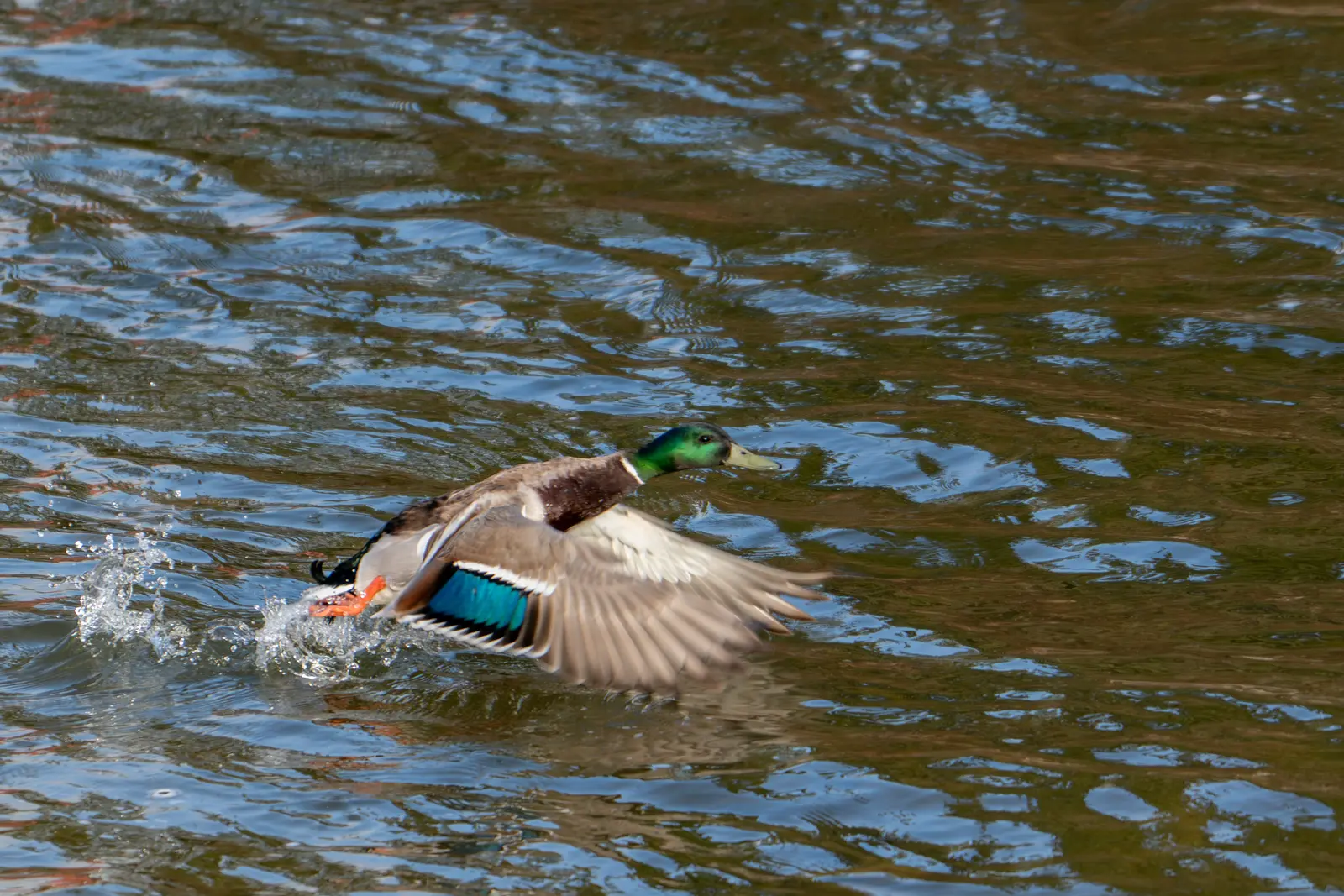
The mallard (Anas platyrhynchos) is the most familiar dabbling duck in North America and one of the commonest waterbirds in the Lake Louise frontcountry. In and around Banff National Park, mallards are most often seen on slow river edges, ponds, wetland margins, and calm sections of the Bow River.
Identification
Adult drakes are unmistakable: glossy green head, yellow bill, white neck ring, chestnut breast, gray body, and blue-purple wing patch bordered in white. Females are mottled brown with orange-and-black bills and the same blue wing patch. Larger and heavier-bodied than teal or harlequin ducks; often seen tipping forward to feed rather than diving.
Habitat and behaviour
Mallards favour sheltered water with shallow edges and abundant aquatic vegetation. They dabble for seeds, aquatic invertebrates, and plant matter, but they also graze on shore. In spring and early summer, pairs occupy ponds and slow channels; later in summer, broods and mixed flocks become more obvious around frontcountry water.
Viewing
Look for mallards in calm backwaters, beaver ponds, campground wetlands, and slower reaches of the Bow Valley rivers. Avoid feeding wildlife. Human food concentrates ducks unnaturally, spreads disease, and encourages the same habituation problems seen with Canada geese.