Independent field guide
Mountain Goat
Last updated:
Mammals
Banff National Park, Rockies
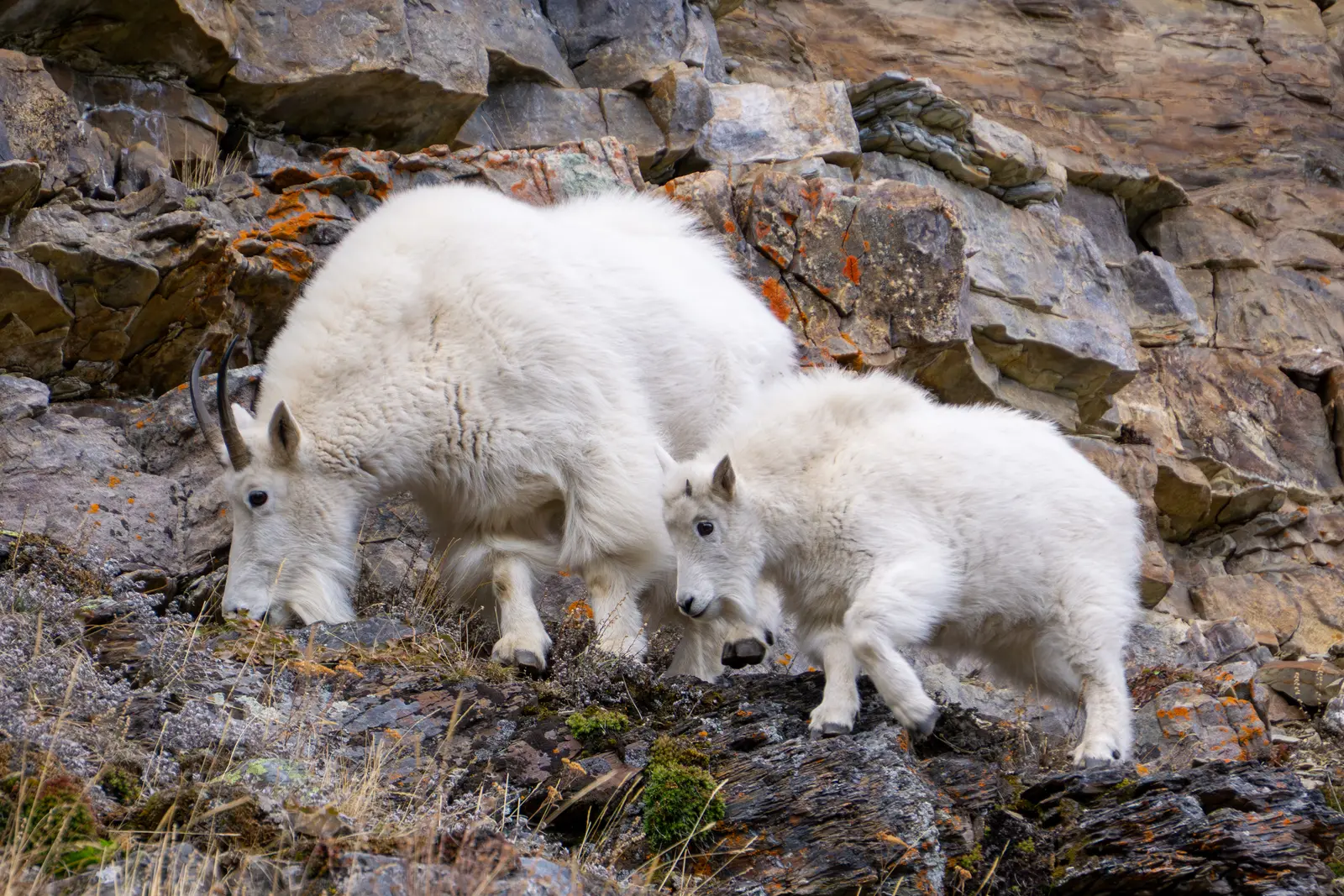
The mountain goat (Oreamnos americanus) is a stocky, white-clad ungulate adapted to steep alpine and subalpine terrain. Despite its name, it is not a true goat but a goat-antelope (Caprinae). In Banff National Park, goats inhabit cliffs, ledges, and avalanche chutes above treeline.
Identification
Dense white coat (yellowish in summer); short black horns (both sexes); beard on chin; humped shoulders. Hooves have rough pads and sharp edges for gripping rock. Often confused with bighorn sheep; goats are whiter, more compact, and prefer steeper terrain; sheep have curled horns (males) and tan-brown colour.
Habitat and diet
Goats favour cliffs, talus, and steep meadows. The sheer quartzite cliffs of the Big Beehive and surrounding Lake Agnes corridor provide refuge for mountain goats. In summer, graze alpine vegetation; in winter, descend to wind-scoured slopes and mineral licks. Salt-seeking behaviour draws them to roadsides; Parks Canada has installed wildlife fencing and designated viewing areas.
Behaviour
Sure-footed climbers; may traverse near-vertical rock. Typically seen in small groups. Aggressive during rut (November–December); mothers with kids (May–June) are protective.
Viewing
Prime locations include the Icefields Parkway (Parker Ridge, Sunwapta), Mount Norquay road, and mineral licks along the Bow Valley Parkway. Use binoculars, follow Parks Canada wildlife-distance guidance, and avoid blocking goat travel routes.