Independent field guide
Mule Deer
Last updated:
Mammals
Banff National Park, Bow Valley
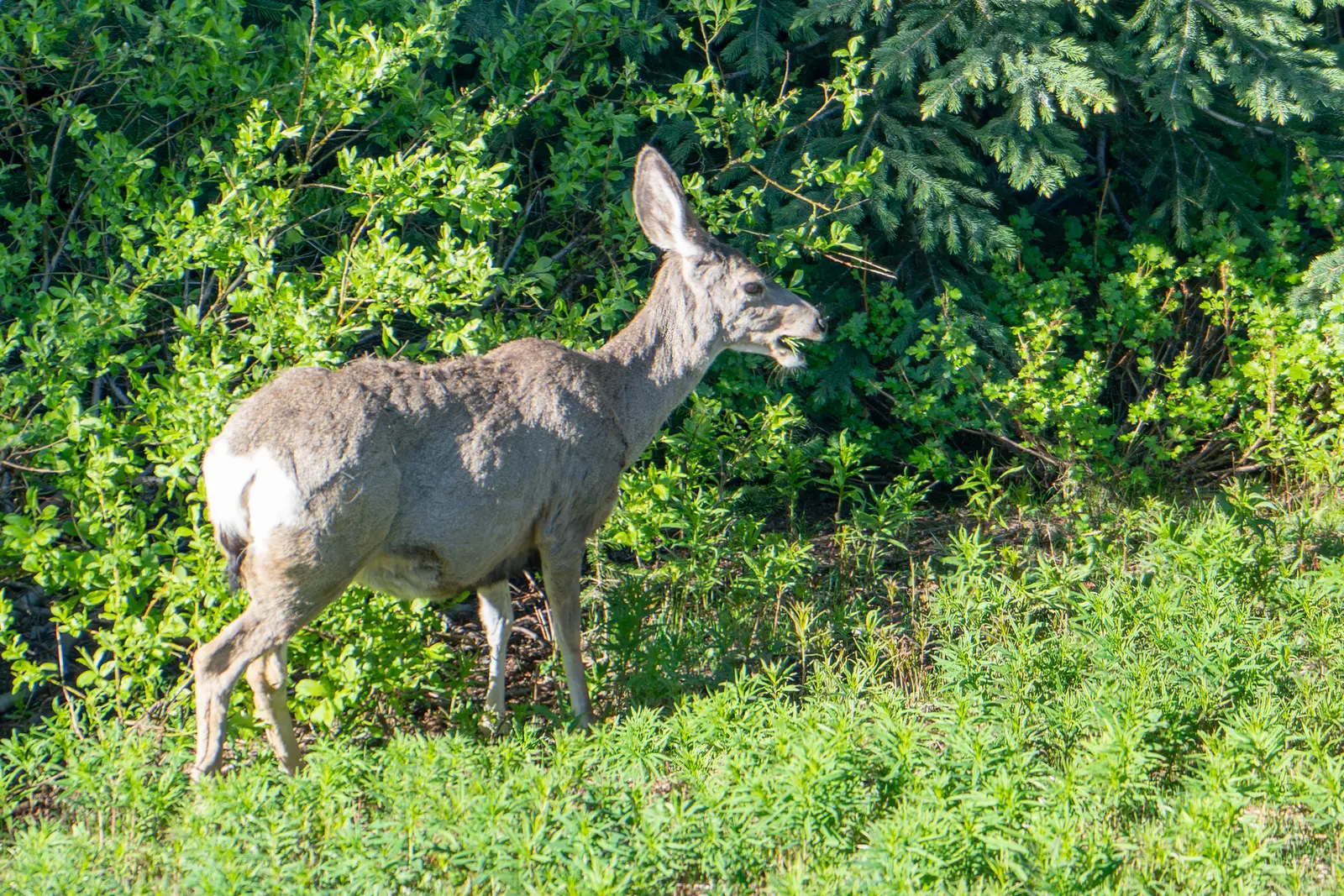
The mule deer (Odocoileus hemionus) is a medium-sized cervid common in Banff National Park; valley floors, forest edges, and meadows. White-tailed deer (O. virginianus) occur at lower elevations but are less abundant in the park.
Identification
Gray-brown coat; large ears (hence “mule”); white rump with black-tipped tail; forked antlers on bucks. Smaller than elk; larger than white-tailed deer. White-tailed deer have a broad white tail (flag when running); mule deer have a narrow tail with a black tip.
Habitat and diet
Mule deer favour montane and subalpine forest edges, aspen groves, and riparian zones. Browsers and grazers: shrubs, forbs, grasses, aspen bark in winter. In winter, descend to lower valleys; in summer, move to higher elevations.
Behaviour
Typically in small groups; bucks may be solitary outside rut. Fawns born May–June. Mule deer “stot” (four-legged bounce) when fleeing; white-tails run with tail raised.
Viewing
Common along the Bow Valley Parkway, Lake Louise townsite, and trailheads. Dawn and dusk are often productive. Follow Parks Canada wildlife-distance guidance and never approach fawns; mothers may leave them hidden and return later.