Independent field guide
Black Bear
Last updated:
Mammals
Banff National Park, Rockies
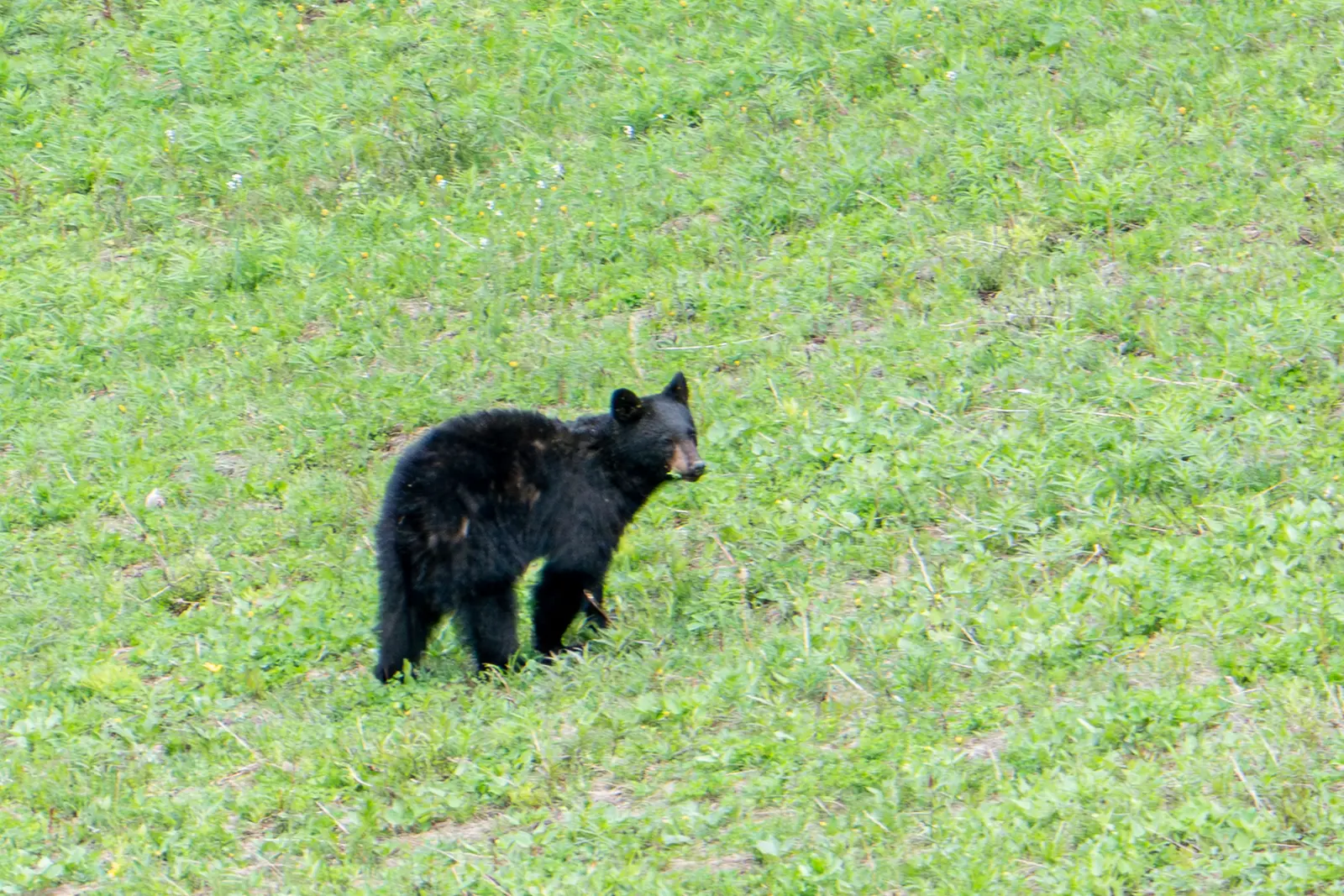
The black bear (Ursus americanus) is the most common and widely distributed bear in the Canadian Rockies. While overshadowed by the larger grizzly bear, it is highly intelligent, agile, and much more likely to be encountered near townsite fringes and campgrounds.
Population and distribution
Roughly 40,000 black bears in Alberta and over 120,000 in British Columbia. In Banff National Park, however, the black bear population is smaller than the grizzly population (approx. 35–40 black bears vs. 65 grizzlies). In Jasper they are more numerous and frequently seen along the roadside.
Colour
Don’t let the name fool you. In the Rockies, black bears are frequently cinnamon, brown, or even blonde. The “cinnamon” phase is particularly common in the mountain parks and is often mistaken for a grizzly; use shape and profile, not colour, to identify.
Identification (black bear vs grizzly)
Black bears have a straight “Roman” nose; tall, pointed, prominent ears; highest point at the rump (rear); short (2–3 cm), dark, curved claws. Grizzlies have a concave “dished” face; short, rounded ears; shoulder hump as highest point; long (5–10 cm), light-coloured claws.
Behaviour and habitat
Forest dwellers; unlike grizzlies, which roam open alpine meadows. Black bears are adapted to forest environments; their short, curved claws make them expert tree climbers, their primary defence. Diet: about 85% vegetation; famously fond of dandelions in spring (drawn to highway shoulders) and buffalo berries in late summer. Not “true” hibernators (body temperature doesn’t drop drastically); they enter torpor for 5–6 months, typically mid-October to late April in the Rockies.
Safety
The leading cause of death for black bears in the mountain parks is vehicle collisions. The installation of wildlife crossings and fencing along the Trans-Canada Highway has significantly reduced these strikes, particularly through underpasses which black bears prefer. Roadside bear jams put animals and visitors at risk; use current Parks Canada bear-safety guidance for roadside viewing, encounters, and emergency response.