Independent field guide
Grizzly Bear
Last updated:
Mammals
Banff National Park, Rockies
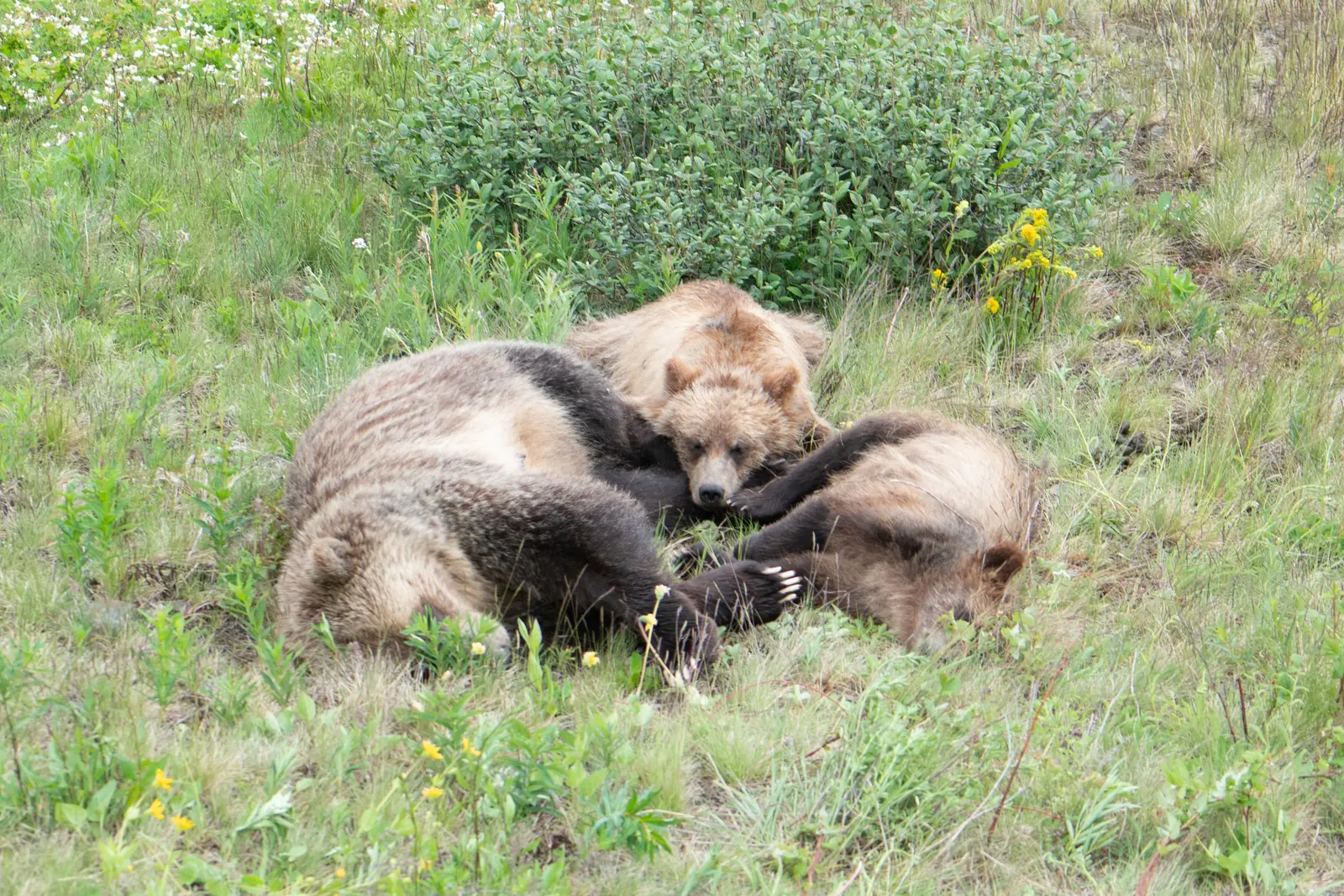
The grizzly bear (Ursus arctos) is one of the most significant large mammals in Banff National Park and the Canadian Rockies. Because of low reproductive rates and sensitivity to human activity, it is listed as “Species of Special Concern” in Canada and “Threatened” in Alberta.
Population and habitat
Parks Canada population estimates have put Banff grizzly numbers in the dozens rather than the hundreds; check current Parks Canada materials for the latest figures. In the Central Rockies, a male’s home range can span 1,000–2,000 km²; females occupy roughly 200–500 km². Slate Range grizzly habitat influenced the Richardson’s Ridge expansion, which required relocating summer sightseeing away from mid-mountain foraging areas. Some individual bears have become local icons; notably “The Boss” (Bear 122), a dominant 600 lb+ male known for surviving being hit by a train and roaming a massive territory that includes the Banff townsite.
Conservation
Parks Canada has implemented major conservation strategies: over 40 wildlife crossings (overpasses and underpasses) with fencing along the Trans-Canada Highway (reducing wildlife-vehicle collisions by ~80%); seasonal closures and group-access restrictions during berry season or when a mother and cubs are present; attractant management in the town of Banff (bear-proof bins, removal of fruit trees). Current closures and group-size rules belong to Parks Canada.
Safety and viewing
Bears are out of hibernation from early April to November; sightings are most common at dawn and dusk. Lower-impact viewing is usually from inside a vehicle or from managed viewing settings such as the Lake Louise Summer Sightseeing Gondola. For hiking, roadside viewing, bear spray use, and closures, use current Parks Canada bear-safety guidance rather than this archive entry.
Identification (grizzly vs black bear)
Grizzlies have a prominent shoulder hump; lower rump than shoulders; “dished” or concave facial profile; long (5–10 cm), light-coloured claws. Black bears lack the hump, have a higher rump, straight or “Roman” nose, and short (2–3 cm), dark claws.
The resort’s Grizzly Bowl and Grizzly Gully runs are named after this animal.