Independent field guide
Skoki Lodge
Last updated:
Backcountry
Skoki Valley
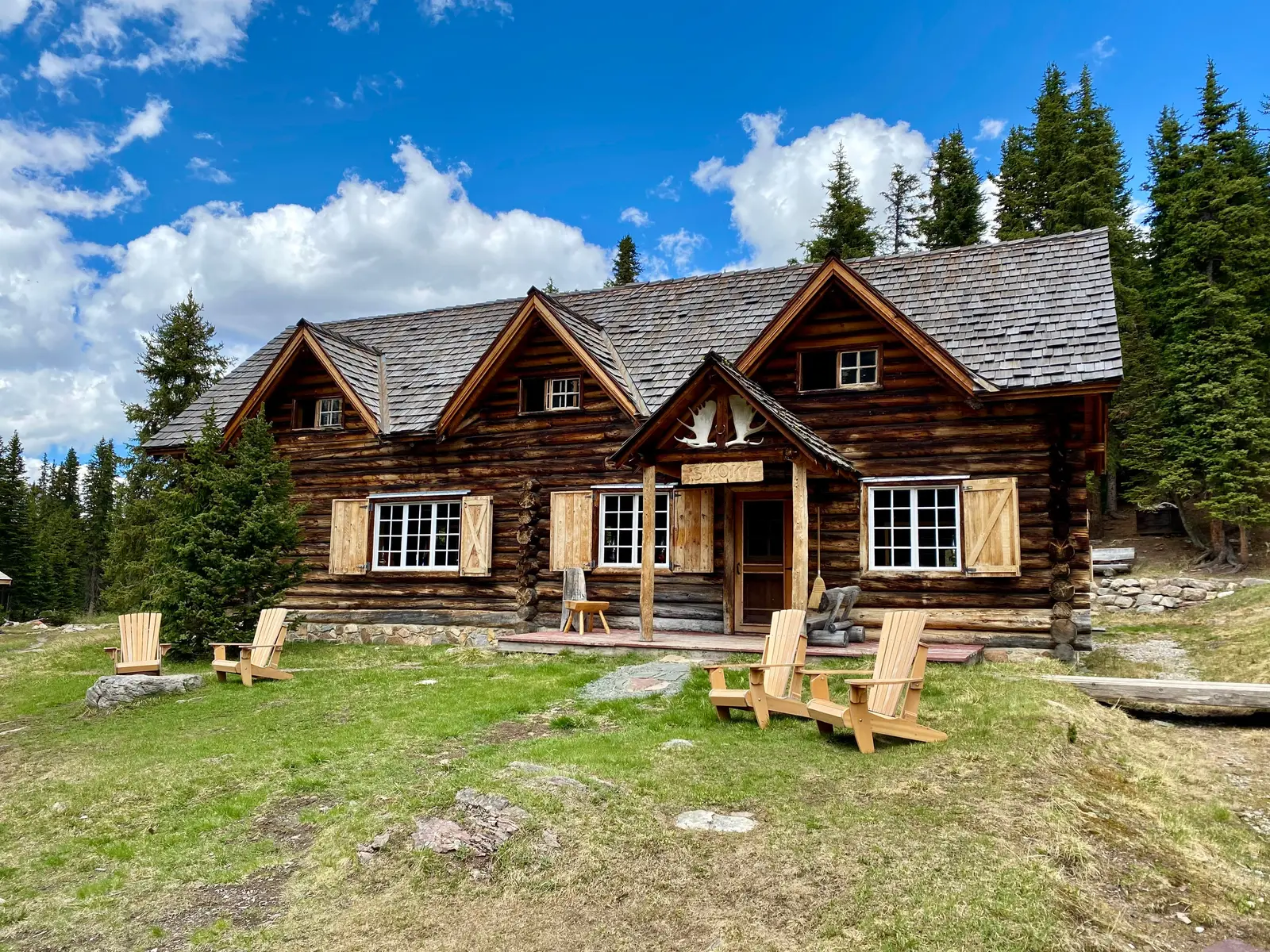
Skoki Lodge is a National Historic Site of Canada (1992) and one of the earliest commercial facilities in North America built specifically for ski tourists. Situated at approximately 2,165 m in the Skoki Valley, it lies 11 km from the Lake Louise Ski Resort, reached by traversing Deception Pass. The lodge preserves the “Rustic Design” tradition; hand-hewn logs, saddle-notched corners, and local stone; and operates without electricity or running water.
Name and Ecology
Charles Doolittle Walcott and his wife Mary Vaux Walcott maintained a seasonal field camp near Skoki Mountain; Charles named the Skoki Formation (1928) after the type locality. The valley was named by James Foster Porter of Illinois, who explored it in 1911 and likened it to the Skokie marshes north of Chicago. The spelling “Skoki” was influenced by an Indigenous word for marsh or swamp; ironic for high alpine meadows. The trail passes through prime habitat for Grizzly Bears, Elk, Hoary Marmots, and American Pikas; Parks Canada manages the area as core grizzly reproductive habitat.
Construction and Architecture
Cliff White and Cyril Paris explored the Ptarmigan and Skoki valleys with Swiss Guides from the Canadian Pacific Railway and selected the site. Clifford Whyte and Paris conceived a permanent backcountry shelter for the Ski Club of the Canadian Rockies (SCCR). Earl Spencer, with Spud White and Victor Kutschera, built the Main Building in 1930; a 25 × 16 ft log structure. A kitchen wing was added in 1931; manager Jim Boyce oversaw the upper floor and dormers (1935–36). Cabins followed: Honeymoon and Wolverine (1932), Creek, Bunkhouse, and Former Bathhouse (1936). The Halfway Hut (1931) provided a rest stop on the trail from Lake Louise.
Heritage and Management
Peter and Catharine Whyte managed the lodge (1932–33), infusing it with art and mountain culture; they later founded the Whyte Museum of the Canadian Rockies (1958). Jim Boyce later built the Lake Louise Ski Lodge (1942), now the Post Hotel, applying the rustic aesthetic refined at Skoki. Elizabeth Rummel managed Skoki and Temple Chalet (1943–1950), overseeing logistics and guest care in the remote backcountry. Sir Norman Watson acquired the SCCR in 1947 and operated Temple, Skoki, and the Post Hotel as an integrated network. June Mickle and Bert Mickle co-managed Skoki and Temple (1961–early 1970s) for Timberline Tours.
Living Heritage
The lodge remains off-grid: wood, coal, and propane for heat; kerosene lamps; communal dining. The 11 km ski or hike-in is a rite of passage. Day trips from the lodge include Merlin Lake (~3 km, ~200 m gain); a turquoise glacial tarn beneath the Wall of Jericho; and the Skoki Lakes (Myosotis 2,265 m, Zigadenus 2,280 m), accessed via the Myosotis Chimney (basic bouldering). See Skoki Valley for the Skoki Loop, passes (Boulder, Deception, Packer’s), and current Parks Canada wildlife/permit guidance. The lodge is operated by the Lake Louise Ski Resort; confirm current lodging and access details directly with the operator.
Official site: skoki.com